

Pilates has quickly become one of the most transformative fitness practices and not because it’s trendy, but because it works. Unlike high-impact workouts that can leave you sore, burnt out, or inconsistent, Pilates focuses on controlled movement, deep muscle engagement, and intentional strength.
Whether your goal is to tone your body, build core strength, improve posture, or simply move in a way that feels good, Pilates offers benefits that go far beyond aesthetics.
What Is Pilates?
Pilates is a low-impact exercise method that emphasizes core strength, flexibility, alignment, and breath control. Originally developed to support injury rehabilitation, it has evolved into a full-body practice used by athletes, beginners, and wellness enthusiasts alike.
There are two main types:
- Mat Pilates – performed on the floor using body weight
- Reformer Pilates – uses a machine with springs and resistance
Both styles focus on slow, intentional movement making Pilates incredibly effective despite its gentle appearance.
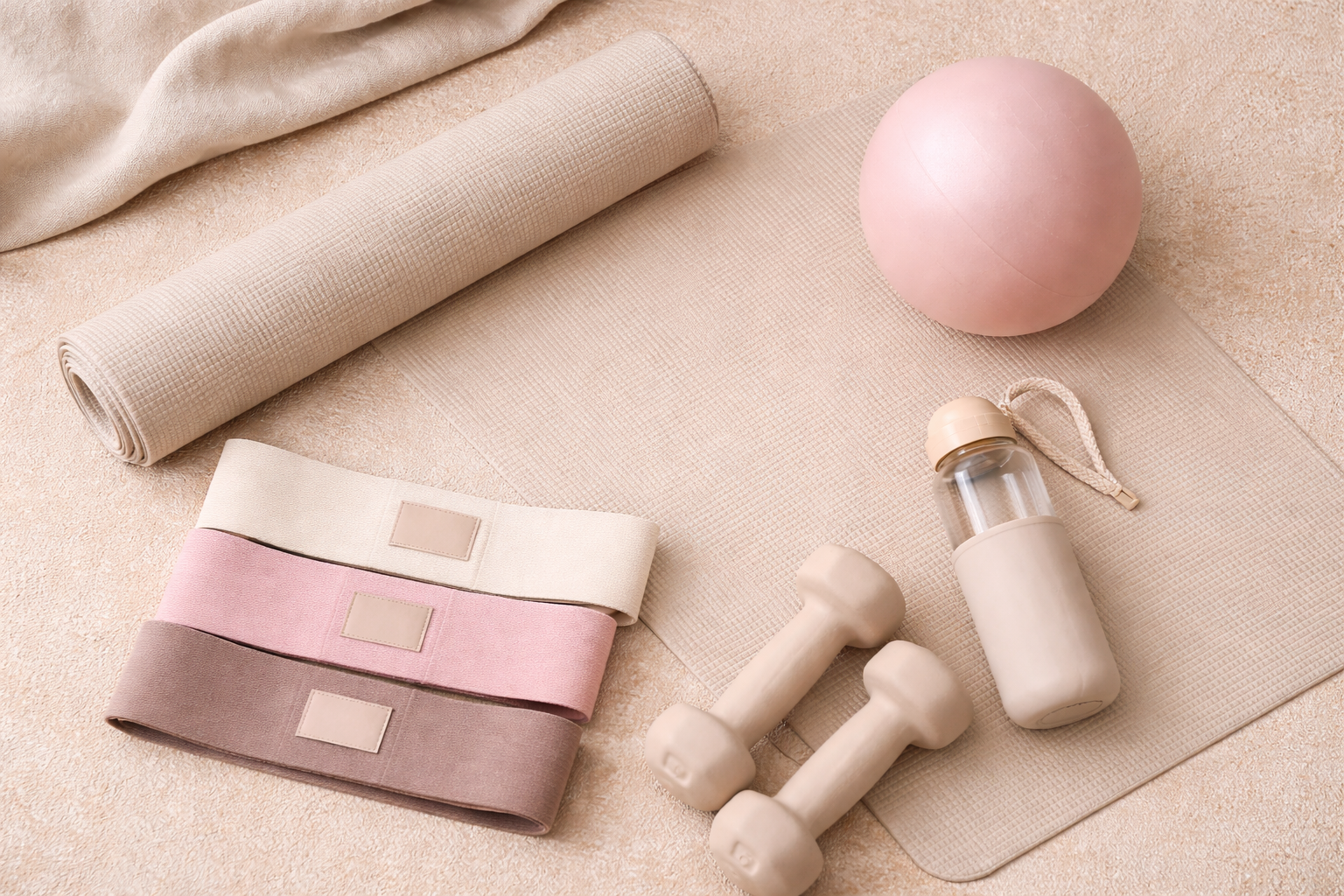
Pilates Essentials to Get Started (What I Used Throughout My Pilates Journey)
One of the things I love most about Pilates is how simple it is to start. You don’t need a full gym or expensive equipment, just a few thoughtfully chosen essentials that make your workouts more comfortable, effective, and easier to stay consistent with.
These are the Pilates basics I personally used throughout my Pilates journey, especially while practicing at home and following YouTube workouts.
Your mat is the foundation of your practice. Pilates involves a lot of time on the floor, so a mat that offers cushioning and grip makes a huge difference, especially for your spine, knees, and tailbone.
Look for:
- Non-slip surface
- Medium-to-thick cushioning
- Easy-to-clean material


While Pilates is effective with just bodyweight, adding light resistance can help deepen muscle engagement as you progress.
These are great for:
- Glute activation
- Inner thigh work
- Core strengthening
- Progressive overload (Pilates-style)

Grip socks help prevent slipping during standing or balance-based movements. They also help you feel more stable and confident, especially during core and lower-body work.
Perfect if you:
- Practice on hardwood or tile floors
- Want better balance and control
- Prefer not to work out barefoot

A Pilates ball is one of the most underrated tools — and one I used often once I became more comfortable with the basics. It helps increase core engagement, balance, and muscle control by creating instability.
Pilates balls are especially effective for:
- Inner thigh and glute activation
- Core and lower ab work
- Improving mind–muscle connection

Ankle weights are completely optional, but they’re a great way to level up your Pilates workouts once bodyweight movements start to feel easier.
They’re best used for:
- Leg lifts and glute-focused workouts
- Low-impact sculpting
- Adding resistance without joint strain

1. Pilates Builds Long, Lean Muscle (Without Bulking)
One of the biggest reasons people fall in love with Pilates is the way it changes the look of their body. Pilates strengthens muscles by keeping them under tension for longer periods, rather than lifting heavy weights for short bursts.
This leads to:
- Lean, sculpted muscles
- Improved muscle definition
- A toned appearance without bulk
Pilates is especially effective for the core, glutes, thighs, arms, and back.
A supportive, non-slip mat makes a huge difference for muscle engagement.
Action step:
Add 2–3 Pilates workouts per week if your goal is toning and definition.
2. Deep Core Strength That Transforms Everything
Pilates doesn’t just train surface-level abs, it strengthens your deep core muscles, including the transverse abdominis, pelvic floor, and lower back.
A strong core improves:
- Balance and stability
- Posture
- Strength training performance
- Everyday movement (lifting, bending, walking)
Many people notice flatter abs and a tighter waistline as a side effect of improved core engagement.
Grip socks help you stay stable and safe during core-focused movements.
Action step:
Focus on breathing and slow control; rushing Pilates reduces results.
3. Better Posture & Less Back Pain
If you spend hours sitting, scrolling, or working at a desk, Pilates can be life-changing. It strengthens the muscles responsible for spinal alignment and posture, helping counteract daily habits that cause pain and stiffness.
Regular Pilates practice can:
- Reduce lower back pain
- Improve shoulder alignment
- Relieve tight hips
- Increase body awareness
Over time, you’ll naturally sit and stand taller without forcing it.
Action step:
Use Pilates on rest days or after long workdays to reset posture.
4. Low-Impact but Surprisingly Challenging
Pilates is gentle on your joints, which makes it ideal for:
- Beginners easing into fitness
- Active recovery days
- Injury prevention and joint health
- Sustainable, long-term movement habits
But don’t let “low-impact” fool you.
Pilates is challenging because it relies on time under tension, deep muscle activation, stability, and precise control. Instead of jumping or lifting heavy, you’re holding positions, moving slowly, and engaging muscles you didn’t even realize were underworked.
This is exactly why Pilates can feel harder than high-impact workouts without leaving you drained or burnt out.
YouTube Pilates Programs That Truly Make a Difference
If you’re starting Pilates at home (or want to stay consistent without studio costs), these are some of my favorite creators that were game-changers in my own Pilates journey:
- Pilates With Izzy – Perfect for beginners who want approachable, effective workouts. Her 25-Day Pilates Challenge is a great way to build consistency and see results without overwhelm.
- Move With Nicole – Known for slow, controlled, burn-focused Pilates that strengthens your core and improves posture.
- Lilly Sabri – Ideal if you enjoy structured, slightly more intense Pilates workouts that still remain low-impact.
These programs prove that you don’t need high-impact movement to get strong, you just need intention and consistency.
Pair your workouts with a quality non-slip mat or grip socks to improve stability and engagement.
Action step:
Replace one high-impact workout per week with a Pilates session from one of these creators and notice how your body feels — stronger, more aligned, and more supported over time.
5. Improves Flexibility Without Overstretching
Unlike static stretching, Pilates builds flexibility through strength and movement. This means your muscles become longer and stronger at the same time.
Benefits include:
- Improved range of motion
- Less muscle tightness
- Better mobility for lifting and cardio
- Reduced risk of injury
Pilates teaches you to move with control, not force.
Action step:
Pair Pilates with strength training for a balanced routine.
6. Enhances Other Workouts & Athletic Performance
Pilates doesn’t replace other workouts, it enhances them.
By improving alignment, mobility, and muscle control, Pilates can:
- Improve lifting form
- Increase running efficiency
- Reduce muscle imbalances
- Support progressive overload safely
Many athletes use Pilates as a foundation for strength and endurance training.
Resistance bands are great for Pilates-inspired warmups and activation.
Action step:
Use Pilates as a warm-up or finisher on strength days.
7. Encourages Consistency Without Burnout
One of the most underrated benefits of Pilates is how it supports long-term consistency. Because Pilates feels restorative rather than exhausting, it’s easier to show up regularly.
Pilates supports:
- A healthy relationship with movement
- Mind–body awareness
- Sustainable fitness habits
This is especially powerful if you’re transitioning away from all-or-nothing workout cycles.
Action step:
Aim for consistency over intensity, results follow naturally.
How to Add Pilates Into Your Workout Routine
Here’s a simple framework depending on your fitness level:
Beginner
- 2x/week Pilates
- Walking or light cardio
- Focus on form and breathing
Intermediate
- 2–3x/week Pilates
- 2x/week strength training
- Pilates on recovery days
Advanced
- Pilates as warm-ups or core days
- Strength + cardio
- Mobility-focused Pilates sessions
A Pilates ring adds challenge without impact.
At-Home vs Studio Pilates
At-home Pilates is perfect if you:
- Want flexibility
- Prefer privacy
- Are budget-conscious
Studio Pilates offers:
- Instructor guidance
- Reformer machines
- Accountability
Both are effective; consistency matters more than location.
Final Thoughts: Why Pilates Is Truly Life-Changing
Pilates teaches you how to move with intention, strength, and awareness. Over time, it doesn’t just change your body, it changes your relationship with movement.
You don’t need to push harder.
You need to move smarter.
Your next step: Try one Pilates workout this week and notice how your body feels afterward, not just how it looks.
Affiliate Disclosure
This post may contain affiliate links, which means I may earn a small commission at no extra cost to you. I only recommend products I genuinely believe add value to a wellness-focused lifestyle.