

Sleep is one of the pillars of wellness, right up there with nutrition and movement. And if you’re anything like me, you’ve tried everything under the sun to fall asleep faster, stay asleep longer, and wake up feeling refreshed.
That’s exactly why I wanted to dig into Beam Dream, a bedtime supplement that’s been getting a lot of buzz online lately. Some people swear it helps them sleep deeply without grogginess. Others say it’s overpriced or doesn’t work at all. So, what’s the truth?
In this post, I’ll break down:
- What Beam Dream is and how it works
- Ingredients and how they may help (or not)
- Real user experiences (good and not-so-good)
- My honest take, including how I use it
- Whether it might be worth adding to your sleep routine
- Where to buy
Let’s dive in.
What Is Beam Dream?
Beam Dream is a sleep-supporting formula available in a powder that you mix with warm water or milk to drink before bed. It’s marketed as a nightcap-style beverage that helps calm your body and mind, shorten the time it takes to fall asleep, and support more restorative sleep throughout the night.
It’s designed to be part of a bedtime ritual, not a prescription medication. Because of that, results can vary widely from person to person.
Some people like it so much they make it a nightly ritual. Others find it doesn’t do much for them at all.
What’s Inside Beam Dream?
The formula blends several ingredients commonly associated with relaxation and sleep support:
- Melatonin – A hormone your body produces naturally to help regulate your sleep-wake cycle.
- Magnesium – Often used to help muscle relaxation and nervous system calm.
- L-Theanine – An amino acid that may support relaxation without sedation.
- Apigenin – A plant compound thought to help with nervous system balance.
- Adaptogens (like Reishi) – Sometimes included to help the body manage stress responses.
Altogether, these ingredients can help some people feel more relaxed as they wind down for bed, but because they act gently, they don’t put everyone to sleep the same way.
How It’s Used In My Experience
My bedtime routine now includes a warm mug of water with a scoop of Beam Dream mixed in about 30–45 minutes before I plan to sleep. The idea is similar to a warm herbal tea which is relaxing and soothing without the heaviness of strong sedatives. My go-to flavor is the Cinnamon Cocoa, it tastes warm, cozy, and feels like a little nighttime ritual rather than a sleep aid.
Some people prefer adding oat milk, cream, or a frother to improve the texture. For me, the routine of mixing and sipping helps signal my body that it’s time to wind down.
If you’re sensitive to supplements like melatonin, you might want to start with a melatonin-free version or a smaller serving and see how your body reacts.
Why It Feels More Like a Cozy Night Ritual Than a Sleep Supplement
One thing that really surprised me about Beam Dream is how cozy and enjoyable it feels to use. Instead of popping a gummy or pill and hoping for the best, it genuinely feels like a small act of self-care at the end of the day.
The flavors are warm and comforting especially when mixed with warm water or milk, almost like a dessert-style nightcap. It’s something I actually look forward to, which makes sticking to a consistent bedtime routine much easier.
Another big difference I noticed compared to traditional melatonin gummies is how I feel the next morning. With gummies, I’ve often woken up feeling heavy, foggy, or slightly off, even if I technically slept longer. With Beam Dream, the transition into sleep feels gentler, and I wake up feeling clear-headed instead of groggy.
It doesn’t knock you out abruptly. Instead, it helps your body naturally wind down, which makes mornings feel smoother and more refreshed rather than sluggish.
Unlike melatonin gummies that can leave you feeling groggy or sluggish the next morning, Beam Dream feels more like a calming nighttime ritual that supports rest without that heavy, “hungover” feeling.
Beam Dream Flavors to Try (And How to Choose One)
One of the things that makes Beam Dream feel more like a cozy bedtime ritual than a supplement is the variety of comforting, dessert-style flavors. Choosing a flavor you genuinely enjoy makes it much easier to stay consistent which matters most when it comes to sleep routines.
Here’s a quick breakdown to help you decide which flavor fits you best.
This is my personal favorite and the one I reach for most often. Cinnamon Cocoa is warm, cozy, and lightly sweet. It tastes like a comforting cup of hot cocoa with a subtle hint of cinnamon. It feels indulgent without being heavy and is perfect for winding down at night.
Best for:
Cozy nighttime routines
Chocolate lovers
Anyone who wants a calming, comforting bedtime drink


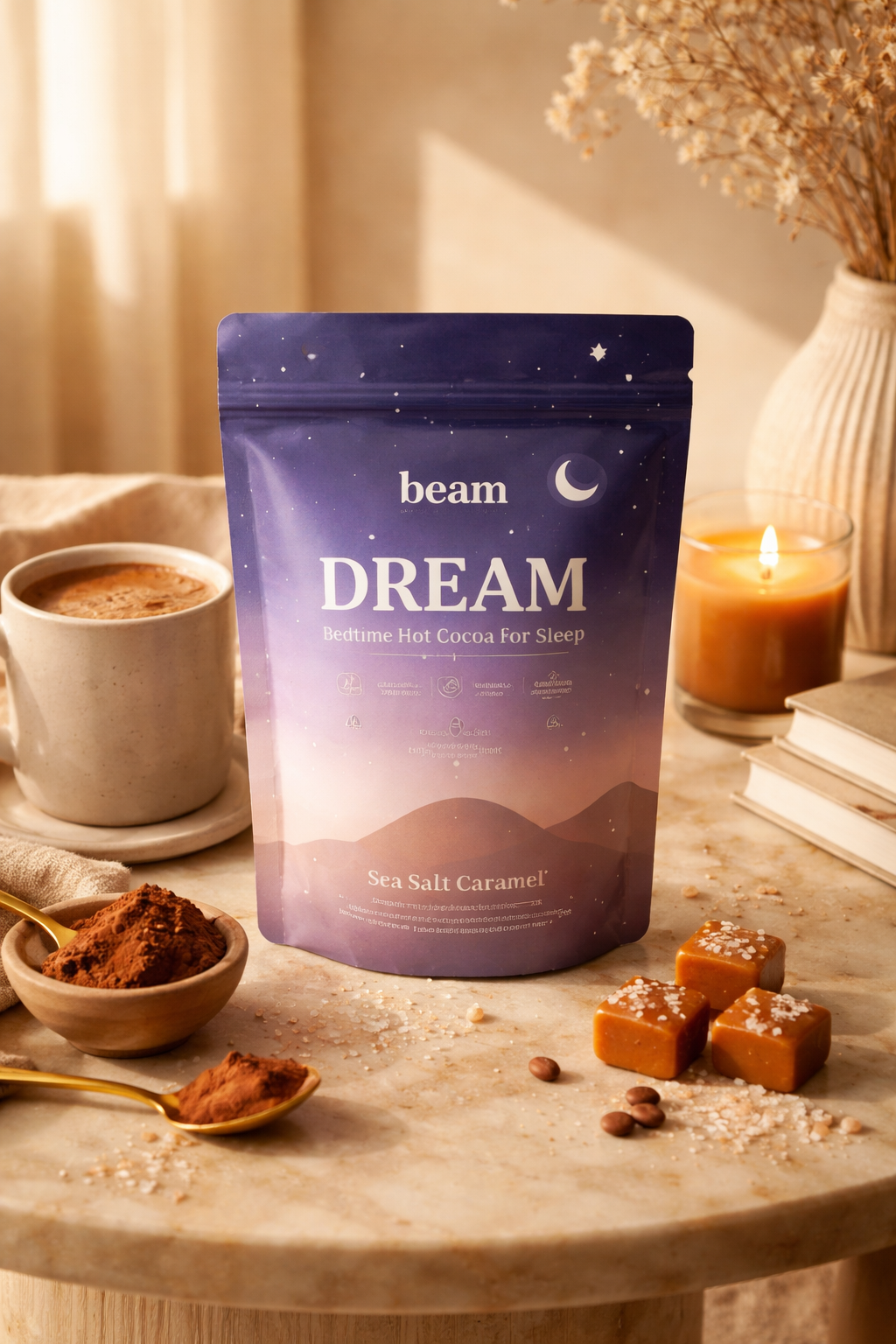
Sea Salt Caramel is rich, smooth, and dessert-like; perfect if your nighttime routine doubles as a little self-care moment. The sweetness is balanced by a touch of salt, making it feel indulgent without being overwhelming.
Best for:
Dessert lovers
Evening wind-down rituals
Anyone who wants something cozy and satisfying

If you love richer flavors, Chocolate Peanut Butter is a great option. It’s creamy, comforting, and feels almost like a warm nighttime treat. This flavor is especially nice if you tend to crave sweets in the evening and want something that feels indulgent but intentional.
Best for:
Fans of chocolate-peanut butter combinations
Those replacing late-night snacks
Anyone who prefers richer, creamier flavors

Mint Chocolate offers a refreshing twist while still feeling cozy. The mint adds a gentle freshness, while the chocolate keeps it calming and making it a great balance between soothing and clean-tasting.
Best for:
Mint tea lovers
Those who like a refreshing finish at night
Anyone who wants something calming but not too sweet

What Users Are Saying
Some people do report that Beam Dream helps them fall asleep faster, sleep more soundly, and wake up feeling refreshed and sometimes without the grogginess associated with standard melatonin supplements.
One Amazon reviewer said it helped them sleep without the morning fog typical of other sleep aids.
Reddit users also mention better sleep quality and deep rest compared with plain melatonin or nothing at all, especially when used consistently as part of a bedtime routine.
What Works Well (and What to Be Careful About)
Here’s a breakdown of Beam Dream’s potential pros and cons:
What’s Positive
- Can support relaxation and calm before bed in some users
- Multiple flavor options
- Available with or without melatonin depending on preference
- Easy to make as a nightly drink
Things to Consider
- Results vary and not guaranteed for everyone
- Price is higher than basic sleep supplements
- Ingredients work best as a ritual and you get the most benefit if you pair with sleep hygiene practices
Does It Pair Well With a Healthy Sleep Routine?
From personal experience and from what many users report, Beam Dream seems to be most effective when paired with:
- Dimming lights 1–2 hours before bed
- Reducing screen exposure
- Warm, calming drinks or stretches
- Consistent nightly timing
In other words, it’s not magic but it can support good sleep habits when used appropriately.
Final Thoughts: Is Beam Dream Worth It?
Beam Dream isn’t a one-size-fits-all solution. But if you’re someone who:
- Likes a bedtime ritual
- Wants something gentle without heavy sedation
- Enjoys flavored evening drinks
- Has tried lifestyle tweaks and still struggles with sleep onset…it can absolutely be worth testing for a few nights to see if it fits your body and routine.
If you’re sensitive to supplements or concerned about cost, you might start with a smaller pack or compare with lower-priced alternatives before committing to a subscription.
And as always, listen to your body, and consult a healthcare provider if you have underlying conditions or take medications that could interact with sleep supplements.
Affiliate Disclosure
This post may contain affiliate links, which means I may earn a small commission at no extra cost to you. I only recommend products I genuinely believe add value to a wellness-focused lifestyle.